 For a better experience on Cayman Socity Of Architects Surveyors & Engineers, update your browser. For a better experience on Cayman Socity Of Architects Surveyors & Engineers, update your browser.
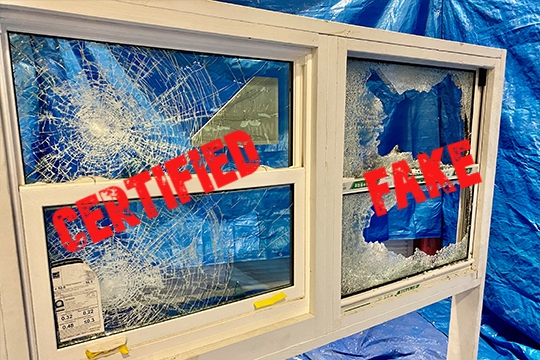
As construction activity continues across the Cayman Islands, the market is seeing an increasing number of imported windows and doors claiming to be "hurricane rated" or "code approved." While many products are legitimate, industry professionals are warning that non-compliant and counterfeit products are becoming more common.
he price difference can be significant. In some cases, selecting unapproved products may save tens of thousands of dollars on a large home. However, the long-term risks can far outweigh the initial savings.
What Does the Code Require?
The Cayman Islands Building Code requires that windows, sliding glass doors, patio doors, skylights, garage doors, and other exterior openings either be protected with approved impact protection or be impact-resistant products that have been tested and certified to recognized standards.
Compliant products must be tested by approved laboratories, carry permanent certification labels, and demonstrate compliance with recognized standards such as ASTM, AAMA, and related impact-resistance requirements. Products should bear permanent labels identifying the manufacturer, performance characteristics, and approving agency.
Why Verification Matters
Industry experts report that some products entering the market carry misleading labels, expired approvals, or approval numbers belonging to entirely different manufacturers.
One of the most reliable ways to verify a product is through the Florida Product Approval database, which can be searched online: https://www.floridabuilding.org/pr/pr_app_srch.aspx
Before purchasing or installing windows and doors, contractors and property owners should verify:
Warning Signs of a Non-Compliant Product
Professionals in the industry have identified several common red flags:
Garage doors deserve particular attention, as they are often overlooked but are equally required to meet wind-load requirements.
Understanding Design Pressure
A window's Design Pressure (DP) rating indicates the wind loads it can safely withstand. The Department of Planning's Technical Bulletin TB0005 explains that required design pressures depend on several factors, including:
For typical residential construction, minimum design pressures vary depending on the wall zone and floor level. Openings located near building corners generally require higher ratings because wind pressures are greatest in these areas.
The Department of Planning also requires windows, doors, skylights, and garage doors to retain their pressure-rating labels until inspections have been completed and approval has been granted.
Understanding Wind-Speed Ratings
A common source of confusion involves wind-speed requirements.
Older product approvals based on earlier versions of ASCE 7 often reference a 150 mph, three-second gust wind speed. Many current products, however, are tested and approved using newer standards such as ASCE 7-2012 and later editions, which use ultimate design wind speeds of up to 186 mph for Exposure Category D locations near the coast and lower values for Category C exposures.
Although the wind-speed numbers differ, properly approved products should still demonstrate the required design pressures for the intended application. When reviewing documentation, purchasers should ensure that the approval corresponds to the correct building code standard and exposure category applicable to the project.
Installation Matters Too
Even an approved window can fail if it is not installed correctly.
The Building Control Unit may require confirmation from the installer that products were installed according to the manufacturer's instructions. This includes using the specified fasteners, maintaining required shim spacing, and using the factory-provided fastening locations rather than drilling unauthorized holes in the frame. A certified product is only as good as its installation.
The Bottom Line
Hurricane-rated windows and doors are a critical part of protecting lives and property in the Cayman Islands. Verifying approvals, checking labels carefully, reviewing design pressure requirements, and ensuring proper installation can help property owners avoid costly mistakes.
If a deal seems unusually inexpensive, it is worth asking a few extra questions. A compliant, properly installed product provides confidence that the building will perform as intended when the next major storm arrives.